


.png)

25-Feb-2026
A Ride-On
Roller is a compact road construction machine used for soil, asphalt,
and surface compaction. Unlike walk-behind rollers, a ride-on roller allows
the operator to sit and control the machine comfortably, making it
suitable for medium to large construction projects.
A Ride-On
Roller is a double drum compaction machine where the operator sits
on the machine and controls it using a steering wheel and control levers.
It
consists of: Front drum, Rear drum, Operator seat, Steering system Engine
(Diesel or Petrol), Hydraulic system the double drum design ensures even
pressure and smooth finishing.
1.
Double Drum System:
Front and rear drums provide uniform compaction, Ideal for asphalt and soil.
2.
Comfortable Operator Seat:
Operator can sit and work easily, Reduces fatigue.
3.
Hydraulic Drive: Smooth
forward and reverse movement., Easy control.
4.
Strong Engine: Usually
diesel-powered., Suitable for continuous work.
5.
Water Tank: Prevents
asphalt sticking to drum.
6.
Compact Size: Easy
to use in small areas.
High
Productivity: Covers
large areas quickly.
Better
Compaction: Uniform
pressure on surface.
Operator
Comfort: Easy to
operate.
Time
Saving: Faster
than manual compaction.
Professional
Finish: Smooth
surface finishing.
Ride-On
Rollers are commonly used in:
Road
Construction: Asphalt
compaction
Soil
Compaction: Foundations
Industrial
Projects: Factory
flooring
Parking
Areas: Surface
levelling
Paver Blocks: Base compaction
1.
Double Drum Ride-On Roller:
Most common type, Used for asphalt
2.
Single Drum Ride-On Roller:
Used for soil
3. Mini
Ride-On Roller: Used
in small projects
Engine
powers the hydraulic system., Drums rotate and move forward., Machine applies
pressure on the surface., Surface becomes compact and smooth.
Drum
Width: 600–1000 mm
Weight: 800–1500 kg
Engine: Diesel/Petrol
Speed: 0–5 km/h
Water Tank: 40–60 Litres
Check
Engine Oil: Daily
inspection.
Clean
Drums: Remove dust
and asphalt.
Check
Hydraulic Oil: Maintain
proper level.
Greasing: Lubricate moving parts.
Check
Bolts: Tighten
regularly.
What is Ride on roller, why we use roller, where we use ride on roller
25-Feb-2026
Read More

.png)
Walk Behind Roller: The Ultimate Guide for Efficient Compaction in Construction
14-Feb-2026
Read More
.png)
High Frequency Vibrator with Inbuilt Converter: The Ultimate Solution for Superior Concrete Compaction
12-Feb-2026
Read More
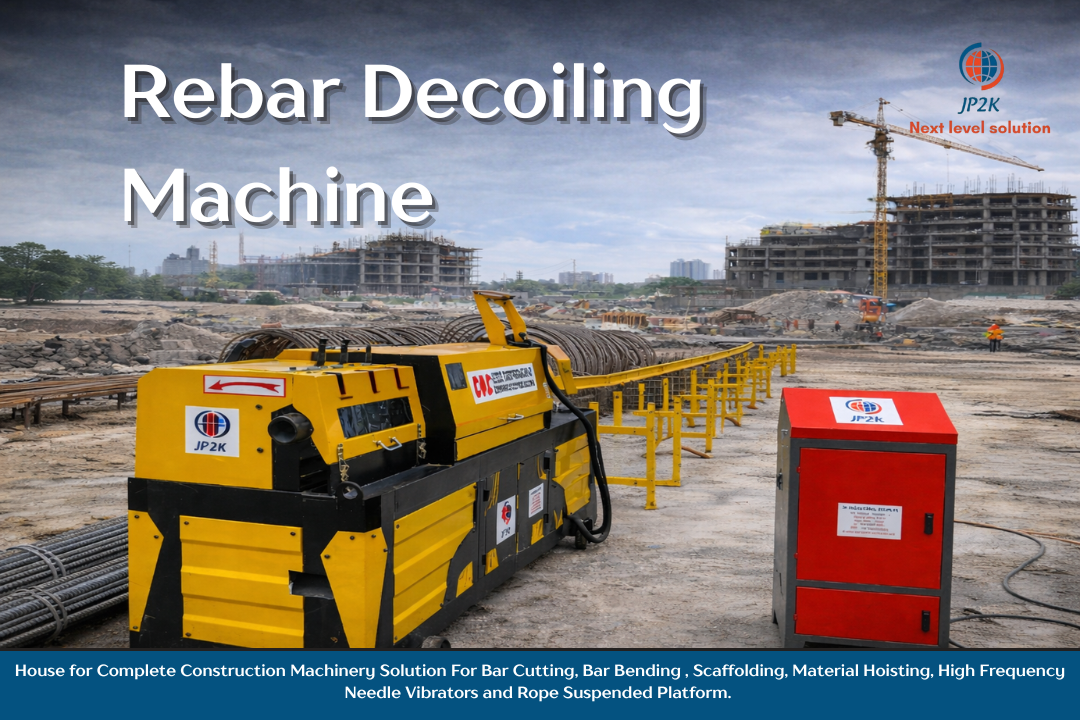
Rebar Decoiling Machine: Complete Guide for Modern Construction Projects
11-Feb-2026
Read More






Copyright © 2025 J P Engineering Services
And Get Technical Specifications